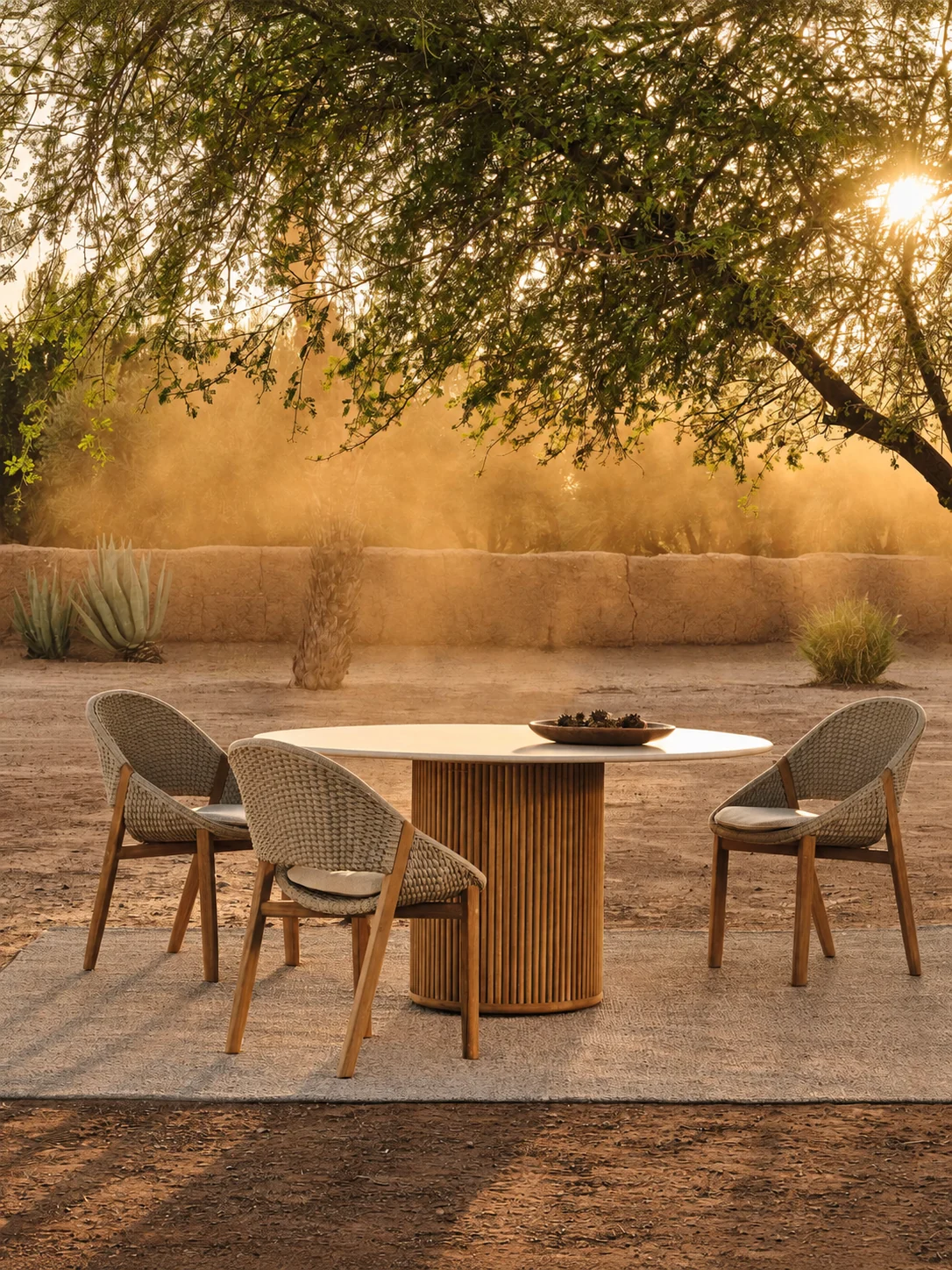
Material selection affects how outdoor furniture looks, feels, moves and ages. For a B2B buyer, the right comparison considers the complete product and its intended environment. A material name is a starting point; construction details, finishes, care requirements and the quality of individual components also shape the result.
Begin with the environment
Describe the exposure before choosing a finish. Covered terraces, open pool decks and coastal dining areas present different conditions. Sun, rain, airborne salt, humidity and daily cleaning all influence the specification. Also consider whether furniture will be moved frequently or stored during quieter seasons.
Ask suppliers to explain the intended use and maintenance requirements of the proposed product. Avoid treating descriptions such as weather resistant or outdoor grade as complete specifications. Request the underlying material details and relevant evidence for the exact configuration you intend to purchase.
Compare frame options
Aluminum frames
Aluminum is commonly selected where manageable weight matters. It can be useful for furniture that staff need to rearrange, but the finished item’s weight and stability still depend on its design. Review tube dimensions, joints, feet and the coating specification rather than judging performance from the frame material alone.
Inspect coating coverage around joints and edges, and ask about repair and cleaning guidance. In exposed locations, request clear information about the suitability of the finish and hardware. A light frame should still suit the use pattern and site conditions of the project.
Steel and timber
Steel can support a broad range of furniture designs and often contributes a substantial feel. Protective treatment, finish quality and exposed connection points deserve attention. Ask how scratches should be addressed and which conditions the supplier considers appropriate for the selected product.
Timber brings a different texture and maintenance routine. Identify the wood species, finish and recommended care rather than buying on a generic wood description. Discuss expected color changes, surface movement and storage guidance. Buyers should decide whether the proposed upkeep suits their customer or operating team.
Look closely at woven surfaces
Synthetic wicker and rope can create visually similar products with different compositions and constructions. Request material descriptions, weave details and care instructions. Check edges, attachment points and the consistency of tension across the seat or back. A sample can reveal handling and comfort differences that images do not show.
For exposed settings, ask about supporting evidence for color retention and material durability. Confirm whether any report applies to the actual fiber, color and product specification being offered. Also discuss how damaged woven components can be serviced and whether replacement parts are available.
Specify cushions as a system
The cover, filling, seams, closures and cushion base all deserve review. A water-repellent cover does not automatically make the entire cushion waterproof. Ask how moisture drains or dries, what care is recommended and whether cushions should be stored under cover when not in use.
Review fabric composition, color references, cleaning instructions and replacement arrangements. Seat comfort should be checked on a representative sample, with the selected filling and dimensions. For a commercial project, include cushion storage and the availability of spare covers in the purchasing discussion.
Check tabletops and practical details
Compare tabletop weight, edge treatment, surface care and the recommended handling process. Ask how heat, spills and frequent cleaning should be managed for the specific material. Check that the base and top are specified together, including fixings, leveling feet and assembly instructions.
Packaging and serviceability are part of material selection too. A product that looks suitable may be harder to handle if its parts are heavy, difficult to replace or easily marked during assembly. Include these practical questions in your review rather than postponing them until delivery.
Turn preferences into a written specification
Create a material schedule for each shortlisted product: frame, finish, surface, fabric, filling, hardware and care instructions. DONGMEI Outdoor Furniture can help coordinate product information and customization discussions with suppliers. Share your intended environment and shortlist through Request a Quote so the conversation begins with the details that matter to your purchase.